


How Precision Honing Helps Ensure Cylindrical Accuracy
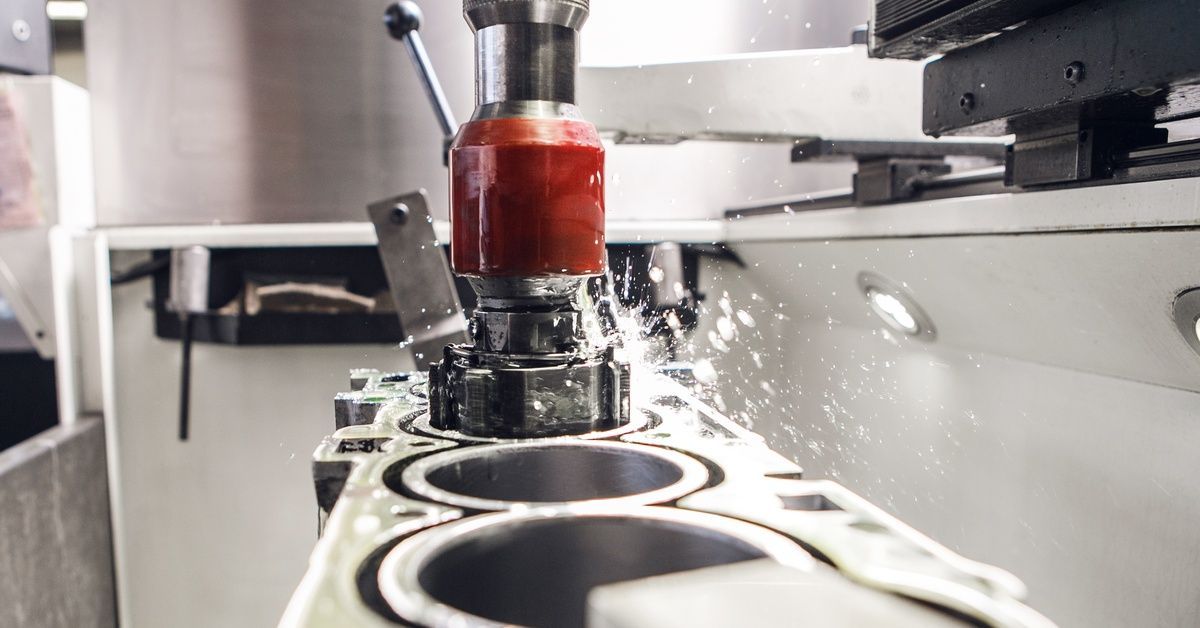
Understanding how precision honing helps ensure cylindrical accuracy starts with recognizing the limits of standard machining. Drilling and boring create the basic internal diameter of a component, yet small deviations in roundness, taper, and straightness can remain. In applications involving pressure, motion, or tight mechanical fits, those minor imperfections can affect performance. Precision honing refines the bore to meet demanding dimensional and surface requirements.
Refining Geometry After Initial Machining
Initial machining establishes size, but it does not deliver perfect geometry along the full length of a cylinder. Tool deflection, heat, and material stress can introduce subtle inconsistencies that are difficult to eliminate in a single pass.
Honing addresses those inconsistencies through controlled abrasive contact that removes material gradually and evenly. As the honing tool rotates and reciprocates, it corrects high spots and brings the internal diameter closer to a true, uniform shape.
Correcting Common Cylindrical Errors
Precision honing targets specific geometric issues that impact the fit and function. The process improves:
- Out-of-round conditions
- Taper from one end of the bore to the other
- Barrel or hourglass shaping
- Minor alignment irregularities
Uniform material removal along the entire bore length supports a straighter, more consistent internal profile. Components that must connect with pistons, shafts, or seals benefit from that higher level of dimensional control.
Achieving Tighter Tolerances With Measurable Control
Honing removes small amounts of material, which allows operators to measure and adjust throughout the process. Completing the task in small increments supports tighter internal diameter tolerances than many rough machining methods alone.
For fabricators and engineers working with stainless components, maintaining tight bore specifications reduces assembly issues and promotes predictable system performance. When cylindrical parts integrate into larger vessels or assemblies, dimensional accuracy supports both structural and operational reliability.
Surface Finish and Functional Performance
Beyond size and shape, honing produces a consistent crosshatch surface pattern. That finish improves lubrication retention and reduces localized wear, which contributes to smoother movement in dynamic applications.
In industries that rely on high-quality internal finishes, such as food processing or fluid handling, internal surface refinement complements external finishing processes. Components like a polished stainless steel tube require attention to both appearance and internal geometry, especially when they serve mechanical or pressure-driven roles.
Precision Honing as Part of a Complete Manufacturing Strategy
Clear insight into how precision honing helps ensure cylindrical accuracy highlights its value within a broader fabrication process. Dimensional refinement, geometric correction, and surface consistency all contribute to components that perform as intended under demanding conditions.
Custom Manufacturing & Polishing Inc. integrates precision finishing with advanced stainless steel fabrication to support complex industrial and architectural projects. For engineered cylindrical components or polished stainless steel tube assemblies built to specifications, contact CMPI to discuss your project requirements and request a consultation.