
A Closer Look at Stainless Steel Pipe Polishing
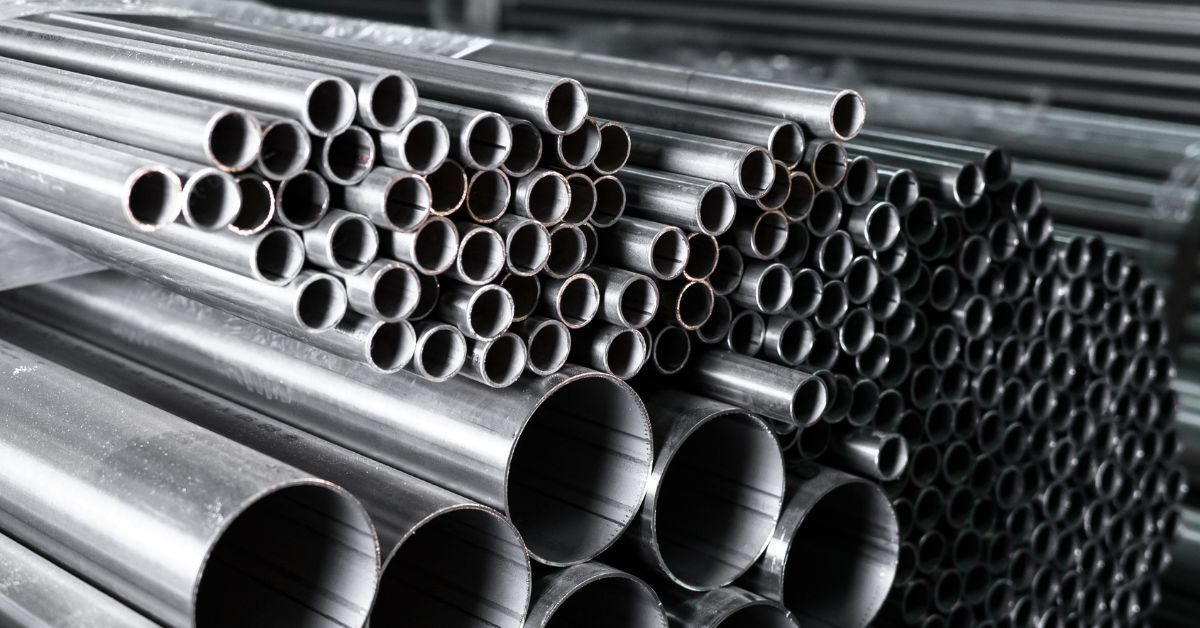
Taking a closer look at stainless steel pipe polishing reveals how surface finish influences performance, service life, and overall project quality. Industries utilize pipes in environments demanding durability and cleanliness, where surface conditions directly dictate long-term resilience. For general contractors, distributors, and those coordinating custom stainless work, understanding the polishing process can align specifications with real-world demands.
What Stainless Steel Pipe Polishing Really Means
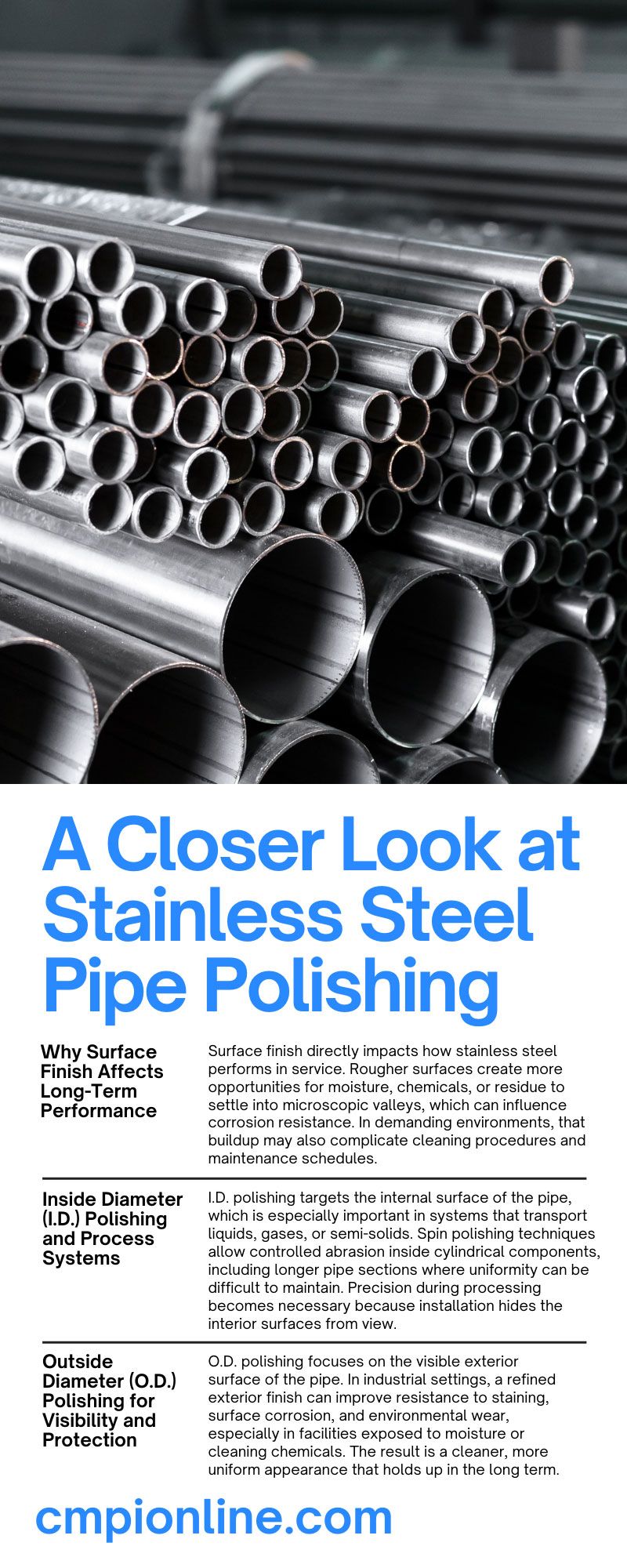
Stainless steel pipe polishing is a structured, multi-step process used to refine the surface of tubular products. The objective is to remove mill scale, weld discoloration, scratches, and other imperfections while achieving a clearly defined finish. Each project begins with a target outcome, whether that involves a specific grit level, reflectivity, or measurable surface roughness.
Rather than relying on a single abrasive pass, polishing progresses through increasingly finer grits. Each stage reduces the depth of surface irregularities left behind by fabrication or prior finishing steps. That progression produces a uniform, consistent appearance along the full length of the pipe.
Why Surface Finish Affects Long-Term Performance
Surface finish directly impacts how stainless steel performs in service. Rougher surfaces create more opportunities for moisture, chemicals, or residue to settle into microscopic valleys, which can influence corrosion resistance. In demanding environments, that buildup may also complicate cleaning procedures and maintenance schedules.
A smoother finish supports easier washdowns and improved resistance to environmental exposure. In industries such as food processing, beverage production, and pharmaceuticals, interior smoothness contributes to meeting sanitation expectations. Even in non-regulated environments, a refined finish can reduce long-term upkeep and surface staining.
Inside Diameter (I.D.) Polishing and Process Systems
I.D. polishing targets the internal surface of the pipe, which is especially important in systems that transport liquids, gases, or semi-solids. Spin polishing techniques allow controlled abrasion inside cylindrical components, including longer pipe sections where uniformity can be difficult to maintain. Precision during processing becomes necessary because installation hides the interior surfaces from view.
When internal surfaces are properly finished, flow characteristics can improve, and areas prone to buildup are minimized. Weld seams and heat-affected zones receive focused attention to prevent irregularities that could trap product or debris. For tanks and vessel components, interior polishing works alongside fabrication to support reliable and consistent operation.
Outside Diameter (O.D.) Polishing for Visibility and Protection
O.D. polishing focuses on the visible exterior surface of the pipe. In industrial settings, a refined exterior finish can improve resistance to staining, surface corrosion, and environmental wear, especially in facilities exposed to moisture or cleaning chemicals. The result is a cleaner, more uniform appearance that holds up in the long term.
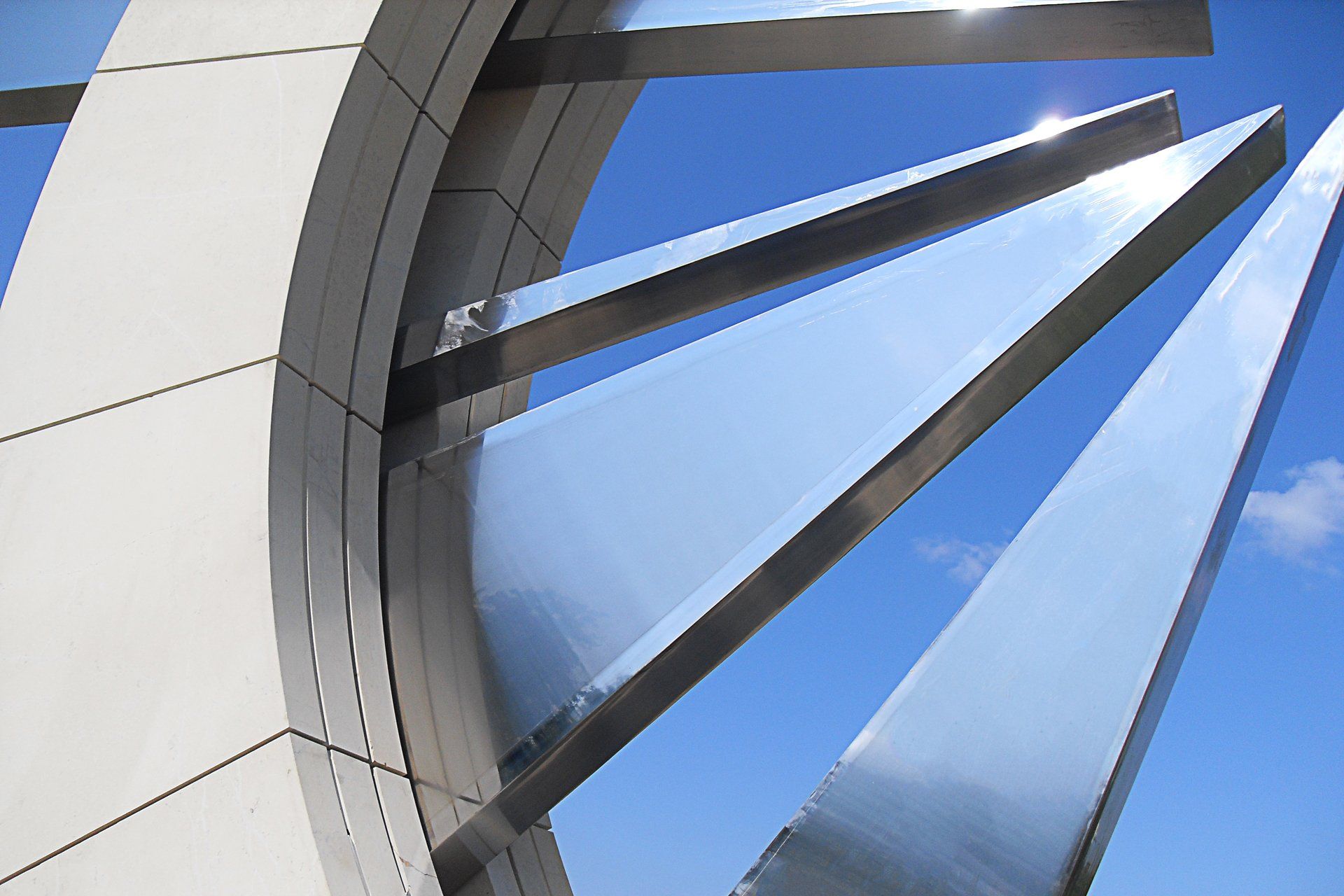
In architectural applications, exterior polishing carries additional importance because the pipe may function as a design feature. Ornamental stainless elements such as handrails and guardrail systems depend on consistent finishing across joints and welded connections. Variations in sheen or grain patterns are noticeable after installation, which is why controlled O.D. polishing is part of a well-executed project.
The Progressive Abrasive Process in Detail
Professional pipe polishing follows a deliberate sequence designed to produce repeatable results. The process typically begins with heavier abrasives to remove weld seams, scale, and deeper surface defects created during fabrication. At this stage, the focus is on leveling the surface and preparing it for further refinement.
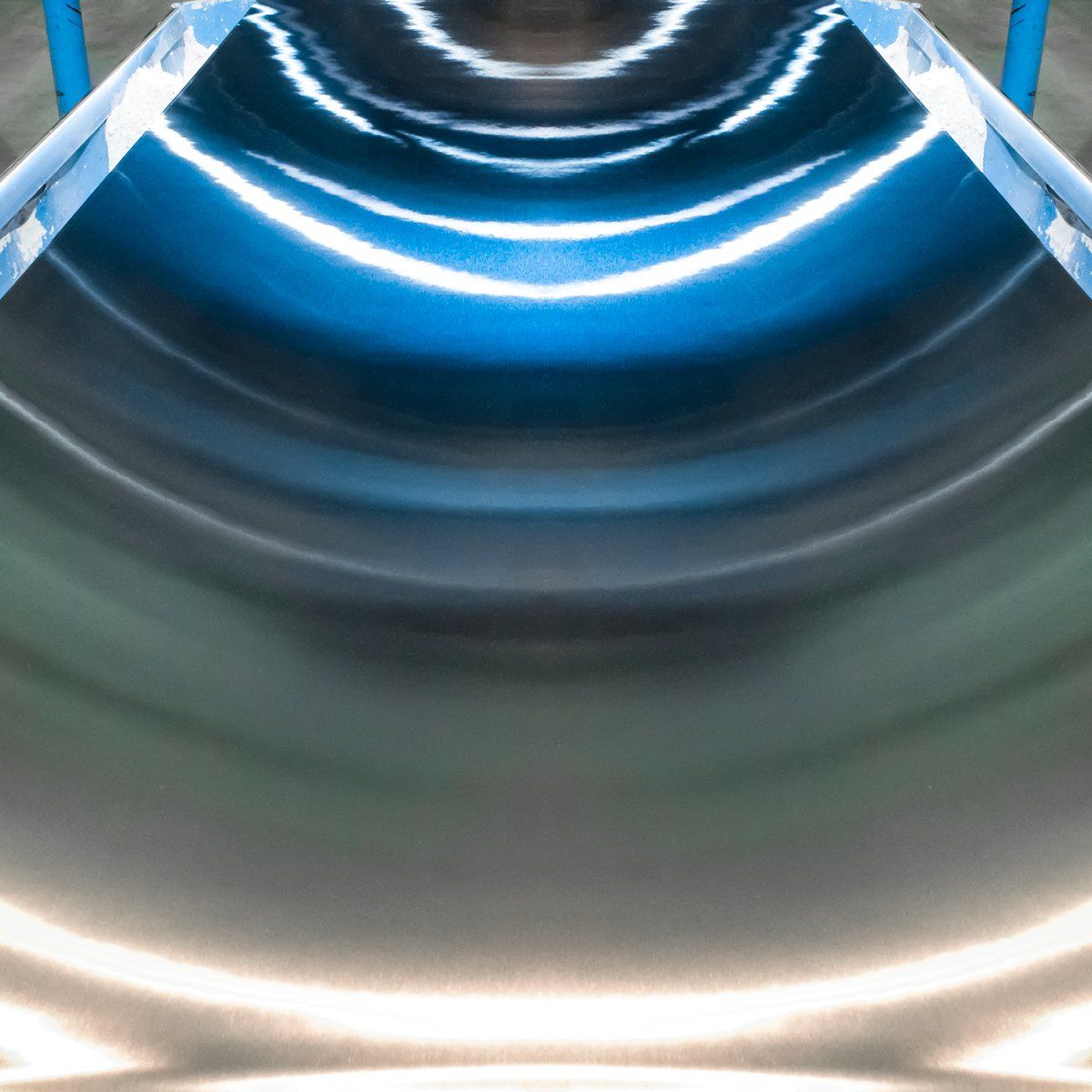
Intermediate sanding steps reduce scratch patterns and transition the surface toward a smoother profile. Each abrasive stage builds on the previous one, gradually tightening the surface texture and evening out inconsistencies. The final polishing phase applies fine abrasives to reach the specified grit or reflective finish, resulting in a uniform surface across the entire pipe length.
Understanding Surface Roughness (Ra) and Finish Standards
Beyond grit numbers, many industrial projects specify surface roughness in terms of Ra values, which measure the average deviation of peaks and valleys on a surface. While grit provides a general indication of finish, Ra offers a more precise and measurable standard. Engineers and inspectors frequently rely on Ra measurements when verifying compliance with process or sanitary requirements.
Achieving a target Ra value requires careful control throughout the polishing sequence. Abrasive selection, pressure, and technique all influence the final surface profile. Clearly defining finish standards at the outset allows operators to adjust polishing procedures to meet both visual and measurable performance criteria.
Common Challenges in Pipe Polishing
Pipe geometry introduces challenges that differ from flat sheet or plate polishing. Maintaining a consistent finish around the full circumference, especially on longer runs, requires specialized tooling and experienced handling. Any variation in pressure or abrasive progression can create visible inconsistencies.
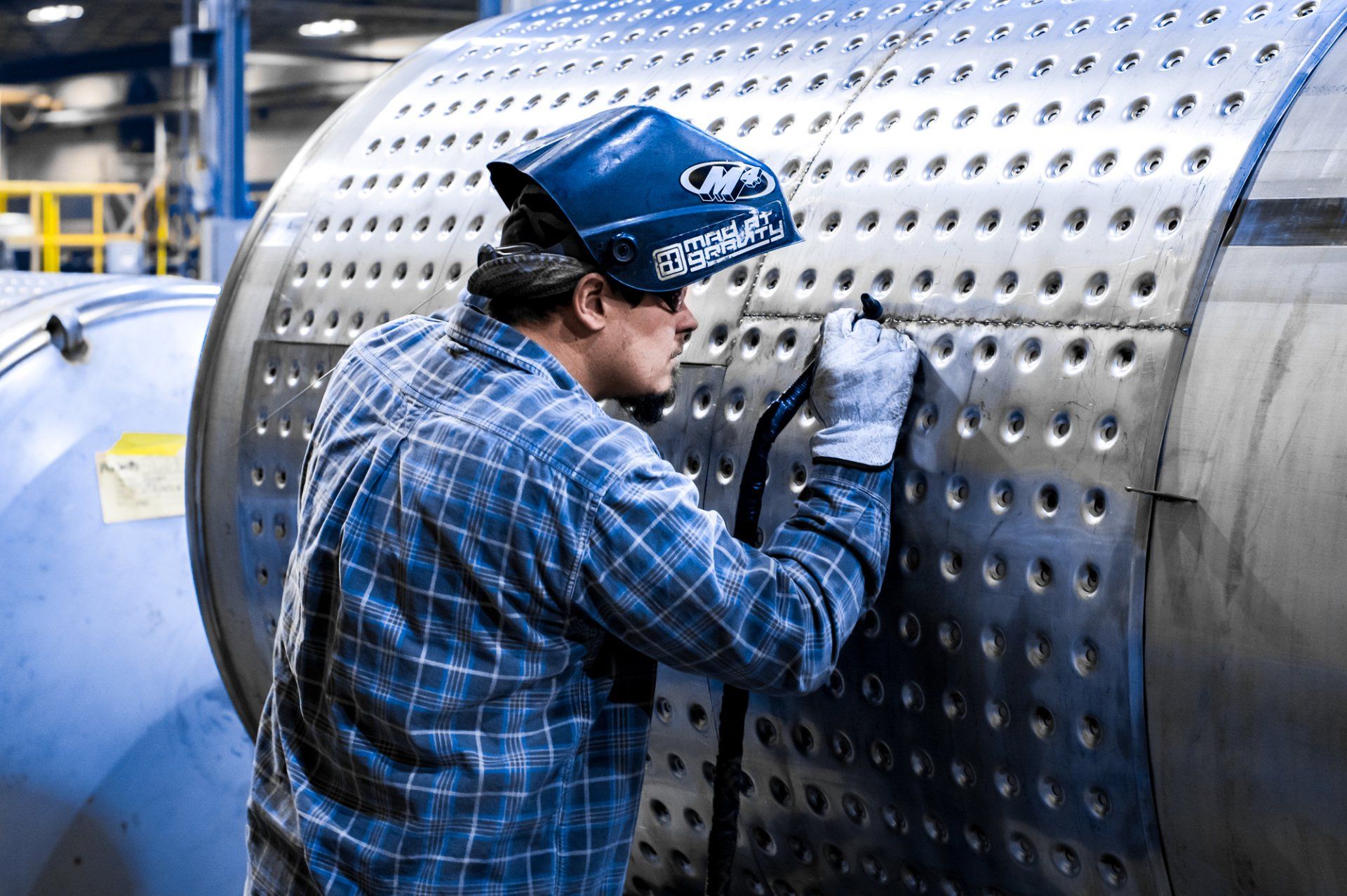
Blending weld seams presents another technical hurdle, as technicians must smooth transitions without creating low spots or altering dimensional integrity. Technicians must also control heat generated during polishing to prevent discoloration or distortion. Addressing these challenges demands a disciplined process and equipment suited to tubular components.
Aligning Finish Specifications With Application Requirements
Every application carries its own performance and visual expectations. Industrial systems may require defined grit finishes or specific Ra values to comply with operational standards, while architectural projects tend to prioritize visual continuity and reflectivity. Clear documentation of these requirements reduces ambiguity during fabrication.
Establishing finish expectations early in the project prevents delays and unnecessary rework. Integrating polishing into the broader fabrication timeline allows teams to manage surface quality and dimensional accuracy together. That coordination supports smoother project execution from production through installation.
The Value of Integrated Fabrication and Polishing
Pipes rarely remain untouched after they arrive at a facility. Cutting, welding, forming, and custom fabrication steps all influence the final surface condition and may introduce new imperfections that require attention before final finishing. Separating polishing from fabrication can add complexity to scheduling and quality control, so keep this in mind when determining project timelines.
Performing both services within the same operation allows teams to manage transitions between fabrication and finishing more efficiently. Which is why weld blending, surface preparation, and final polishing occur in a controlled sequence that maintains consistency. For large or highly customized projects, this supports predictable outcomes.
Choosing a Polishing Partner With the Right Capabilities
Selecting a polishing provider involves evaluating technical expertise, equipment capacity, and experience with varied pipe specifications. Diameter, wall thickness, length, and finish requirements all influence the approach to the work, and projects with sanitary or high visibility demands require a disciplined and repeatable process.
Facilities capable of handling sheet, plate, pipe, tube, and custom shapes offer flexibility as project scopes evolve. That adaptability adds value when projects require additional stainless components beyond the original pipe specification. A capable partner can maintain consistency across all finished elements within a project.
Precision Finishing That Supports Long-Term Performance
A closer look at stainless steel pipe polishing underscores how surface refinement contributes to durability, cleanliness, and cohesive design. When properly specified and executed, polished stainless steel pipe performs reliably in both industrial systems and architectural installations, and the finish supports how the material functions, not just how it looks.
Custom Manufacturing & Polishing Inc. provides nationwide stainless steel polishing and fabrication services. If your project calls for precision-finished stainless components, contact CMPI to review your specifications and request a quote.