


Pipe Fabrication Standards To Know: WPS, NDT, & ASME
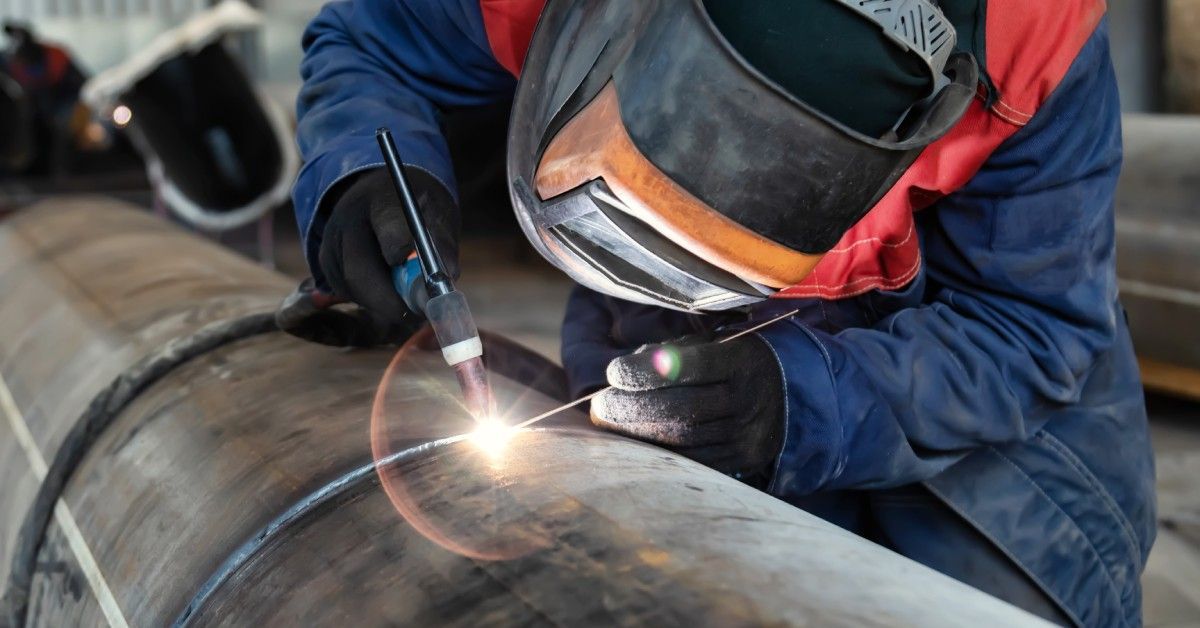
In custom fabrication, a quality final product hinges on the performance of the materials and the work the welders complete. But when project timelines are tight and budgets are strict, some might overlook foundational fabrication standards. Understanding these guidelines prevents costly rework and delivers a final product that meets every standard from safety and compliance to the client’s satisfaction and reinforces your positive reputation.
This guide will cover the pipe fabrication standards to know, like WPS, NDT, and ASME. We will explore welding procedure specifications (WPS), nondestructive testing (NDT), and the American Society of Mechanical Engineers (ASME) codes to understand these pillars of quality control.
Essential Pipe Fabrication Standards
Understanding and applying fabrication standards ensures quality, safety, and compliance in custom pipe fabrication. Here is a breakdown of some of those standards.
Welding Procedure Specification (WPS)
This is a formal document that outlines each variable for a specific weld, such as materials, techniques, and parameters. It guides welders to consistently perform each weld to a proven standard for safety and quality.
Nondestructive Testing (NDT)
Inspection methods like dye penetrant testing and radiographic testing assess the integrity of welds and materials without causing any damage. NDT verifies that the fabricated components are free of defects and reliable for service.
American Society of Mechanical Engineers (ASME) Codes
Governing standards, such as ASME B31.3 for Process Piping and Section IX for welding qualifications, provide comprehensive rules for design, fabrication, and inspection. These codes ensure every component meets compliance, performance, and safety requirements
Standards for Stainless Steel
Stainless steel fabrication demands an even higher level of attention to standards due to the material's unique properties. Its composition makes it susceptible to heat distortion and a loss of corrosion resistance (sensitization) if welded improperly. A detailed WPS is necessary to learn how to control heat input and protect the material from corrosion.
Because most stainless steel is nonmagnetic, certain NDT methods, like magnetic particle testing, are ineffective. Specialized methods, such as dye penetrant testing (PT), can detect surface-level flaws.
Preventing Costly Rework and Project Delays
A firm grasp of fabrication standards is a powerful tool for risk management. By requiring and verifying adherence to a qualified WPS and a thorough NDT plan, project leaders reduce the likelihood of weld defects. Catching a flaw during fabrication is far more efficient and cost-effective than addressing a failure after installation, which will involve system shutdowns and complex repairs.
Partner With a Fabrication Expert
Navigating pipe fabrication standards to know and the complexities of WPS, NDT, and ASME requires deep technical knowledge. An expert fabricator follows the codes and understands the science behind them, and they apply those correct procedures to your projects.
Since 1992, Custom Manufacturing & Polishing, Inc. upholds the industry's most rigorous standards for delivering superior quality in stainless steel pipe fabrication and polishing. We strive with a commitment to precision and quality to complete your project correctly the first time. Contact us today to learn how our custom fabrication services can bring reliability and excellence to your next project.