

Rolling vs. Press Brake: Which is Right for Sheet Forming?
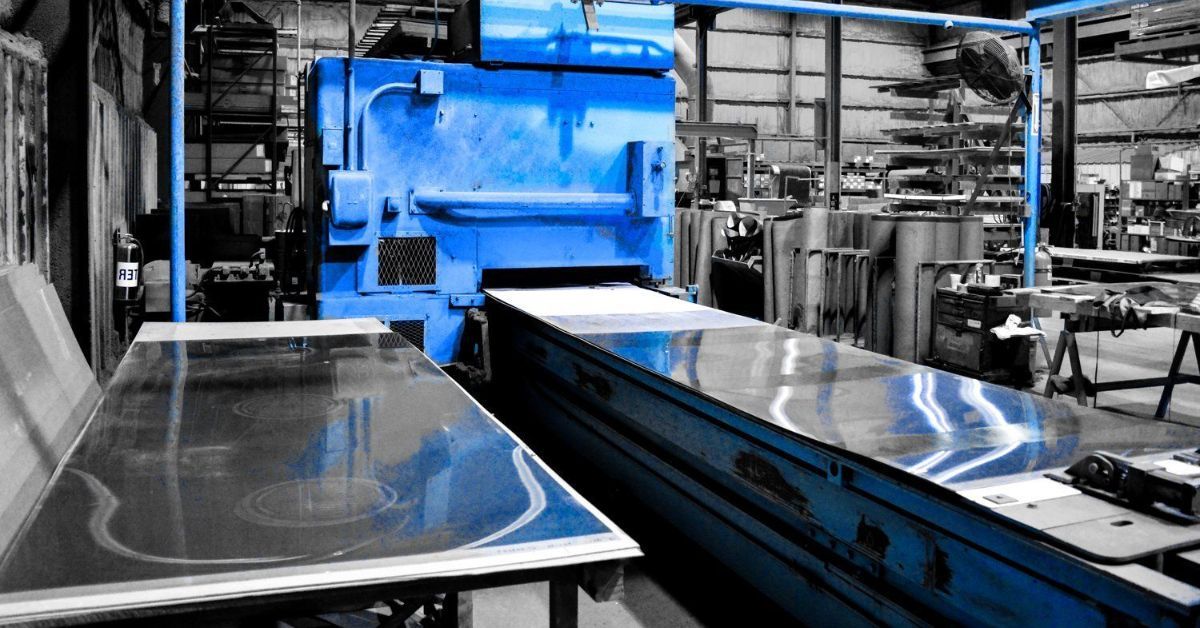
Sheet forming projects require forming methods influenced by geometry, production efficiency, and material behavior. Choosing the wrong process can create unnecessary challenges, while selecting the right one can improve both fabrication outcomes and production flow.
Understanding sheet forming processes, such as rolling and press brake, starts with recognizing that each option serves a different purpose. Although both methods shape metal, they achieve those results through different techniques and support different design requirements. Evaluating those differences early allows project teams to make more informed fabrication decisions.
How Rolling and Press Brake Forming Differ
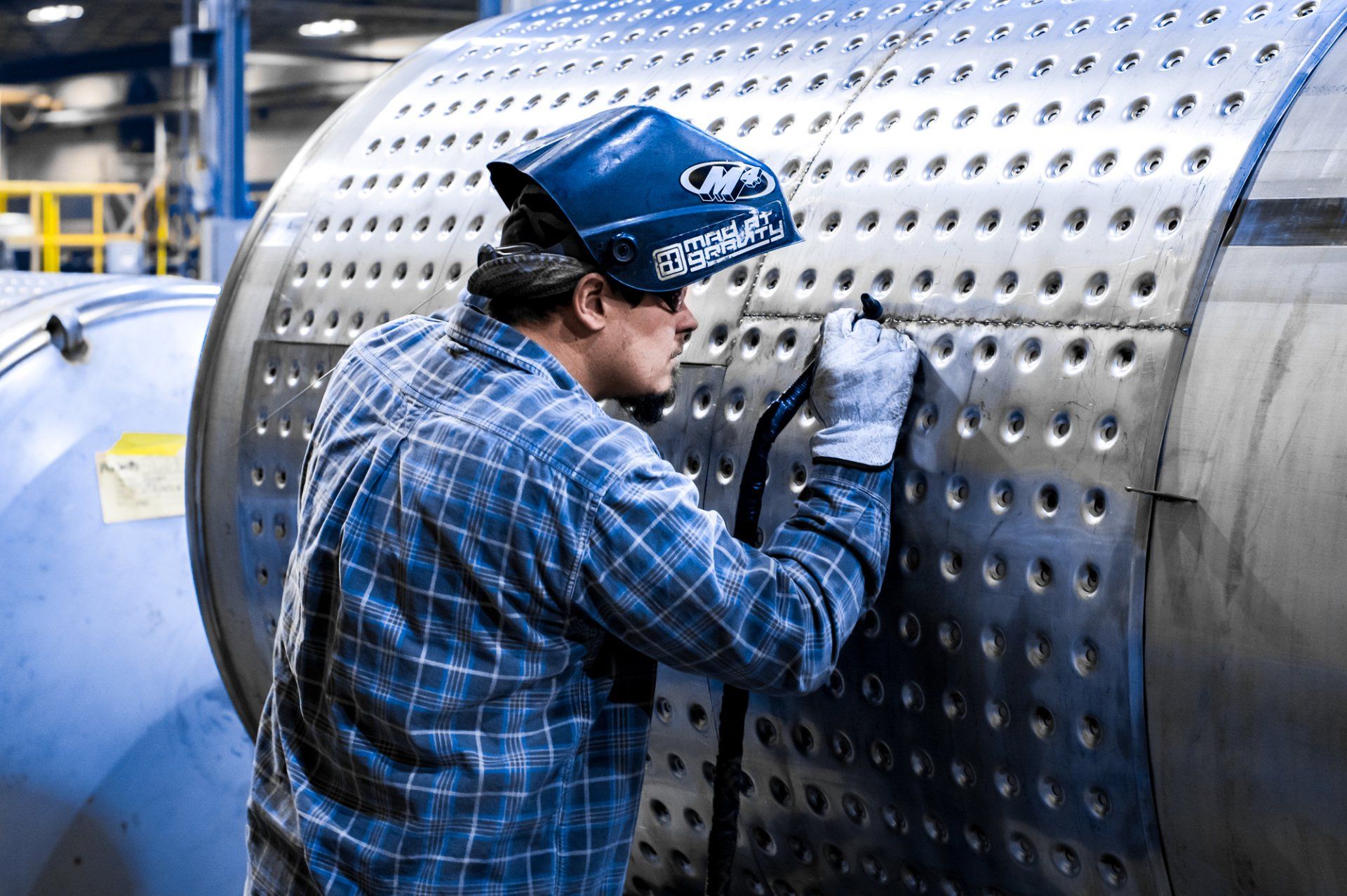
Rolling and press brake forming both alter the shape of metal, but the processes operate differently. Rolling gradually forms material through a series of rollers that create curved profiles, cylinders, or large-radius bends. This continuous shaping process allows material to transition smoothly into the desired form.
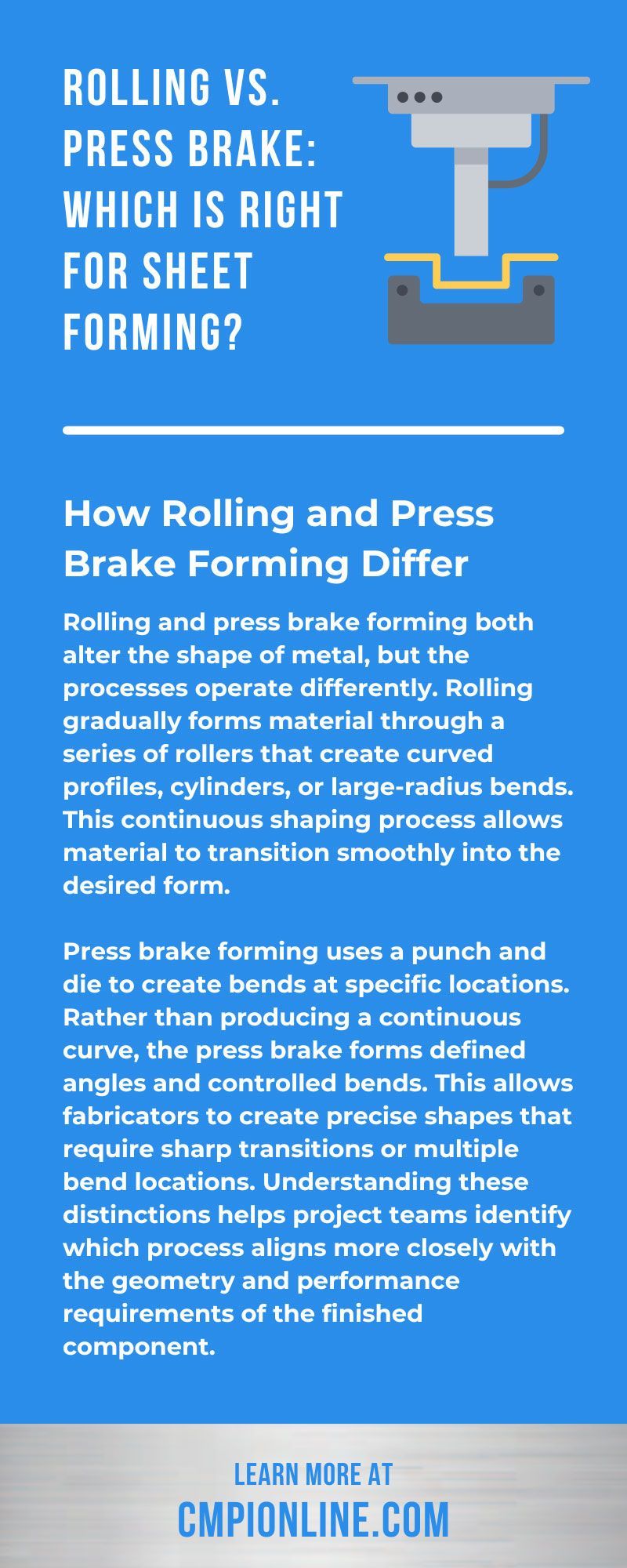
Press brake forming uses a punch and die to create bends at specific locations. Rather than producing a continuous curve, the press brake forms defined angles and controlled bends. This allows fabricators to create precise shapes that require sharp transitions or multiple bend locations. Understanding these distinctions helps project teams identify which process aligns more closely with the geometry and performance requirements of the finished component.
When Rolling Becomes the Better Choice
Rolling is commonly selected when projects require large-radius curves or cylindrical shapes. These elements rely on rolling because the process produces smooth, consistent geometry across long sections of material.
The process also works well when gradual shaping is important to the final design. Because rolling distributes force across a broader area, it can create continuous forms that would be difficult or impractical to achieve with a press brake. Projects that prioritize flowing profiles or large-scale curved components frequently benefit from the capabilities rolling provides.
Where Press Brake Forming Excels
Press brake forming offers advantages when projects require defined angles and tight dimensional control. Components such as brackets, support structures, and formed panels frequently rely on this process because it allows fabricators to place bends precisely where they need them.
This level of control makes the press brake particularly effective for complex parts that require multiple bends within a relatively small footprint. The process also provides flexibility when designs involve varying bend angles throughout a component. As a result, manufacturers tend to choose press brake forming for projects that demand repeatability and precise dimensional outcomes.
Material Thickness and Forming Considerations
Material characteristics influence how effectively each process performs. These characteristics include thickness, strength, and bend requirements, which all affect whether rolling or press brake forming provides the better solution. Some materials respond more readily to gradual shaping, while others may be better suited to localized bending operations.
Evaluating material behavior alongside design objectives determines which process aligns best with fabrication goals. Taking the time to assess these variables early can reduce production challenges and improve consistency throughout manufacturing.
How Tolerances Influence Process Selection
Forming tolerances determine whether rolling or press brake forming is the better fit for a project. While both processes can produce highly functional components, the level of dimensional precision required influences the preferred manufacturing approach. Projects involving tight bend locations or highly controlled dimensions frequently benefit from the accuracy that press brake forming provides.
Engineers should evaluate tolerance requirements alongside downstream fabrication steps. For example, welding, machining, and assembly processes may introduce additional variables that affect the final component. Understanding these requirements early allows fabrication teams to select a forming method that supports both production efficiency and dimensional consistency.
The Impact on Part Geometry
Part geometry often becomes the deciding factor when selecting a forming method. Continuous curves naturally align with rolling, while defined angles typically favor press brake forming. However, some projects may incorporate both methods to achieve different features within the same component.
Understanding how geometry influences manufacturing requirements assists teams in avoiding unnecessary complexity during production. Matching the forming process to the intended shape generally produces more efficient and predictable results while supporting the design intent.
Balancing Precision and Shape Requirements
Not every project prioritizes the same outcomes, and some applications require highly controlled bend locations, while others focus on achieving smooth, uninterrupted curves. Determining which characteristic matters most allows fabrication teams to narrow their process selection more effectively.
Considering these priorities early also reduces the likelihood of redesigns later in production. A clear understanding of shape requirements aligns fabrication methods with project expectations and minimizes avoidable manufacturing adjustments.
Production Efficiency and Workflow Planning
Selecting the appropriate process early helps fabrication teams establish realistic production plans and reduce unnecessary adjustments. When the forming method aligns with the design intent, production tends to move more smoothly from fabrication through finishing. This coordination supports greater consistency across both individual components and larger production runs. It also allows manufacturers to allocate resources more effectively throughout the project lifecycle.
Considering Secondary Fabrication Operations
Forming is rarely the final manufacturing step since many components undergo additional welding, machining, or assembly before they reach their final application. The chosen forming method influences how efficiently workers complete those downstream processes.
For example, a design with smooth curved sections integrates more naturally into certain fabrication sequences when workers use rolling. Conversely, components requiring precise bend locations may simplify assembly and alignment when produced with a press brake. Evaluating secondary operations alongside forming requirements allows teams to develop a more coordinated manufacturing plan and reduce avoidable production challenges.
Choosing the Right Forming Method for the Job
Successfully evaluating which is right for sheet forming, rolling or press brakes, requires balancing several aspects. Neither process is universally better than the other because each serves different fabrication needs. The most effective choice depends on how the finished component must perform and how the design translates into manufacturing requirements.
For projects involving stainless steel plate cut to size, Custom Manufacturing & Polishing, Inc. provides fabrication expertise that fits any project specifications. Whether it requires rolled components, precision press brake forming, or a combination of both, their team can evaluate manufacturing requirements and identify the most effective approach. Contact Custom Manufacturing & Polishing, Inc. to discuss your project and explore fabrication solutions that support your production goals.